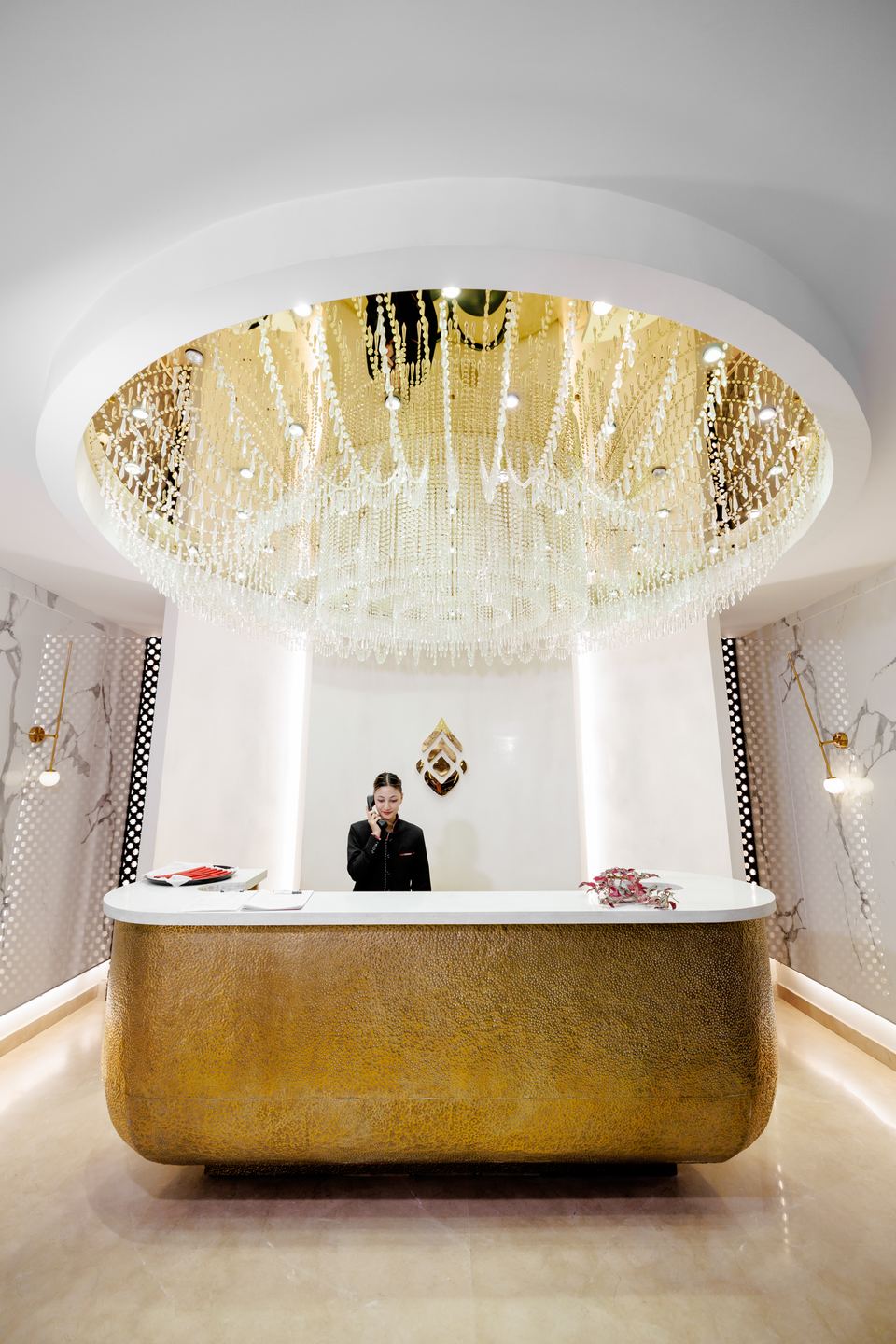
Hand-hammered brass
The reception desk and the chandelier above it were made for Square. The brass was hammered by hand — every dimple its own. The chandelier alone took a month to install.
Most hotels open with the architecture. Ours opens with a letter, because the architecture is downstream of the reason.
Fifteen prayer wheels. Spinning.
This hotel was first imagined in 2014. One day, I remember thinking, when we have the resources, we will build something that is ours. Not as an investment. As a place.
We broke ground in 2019. A son arrived in our family that same day. Construction continued through three monsoons and one pandemic; a daughter arrived along the way. We are not the first family in Nepal to build a hotel together. We hope to be a useful one.
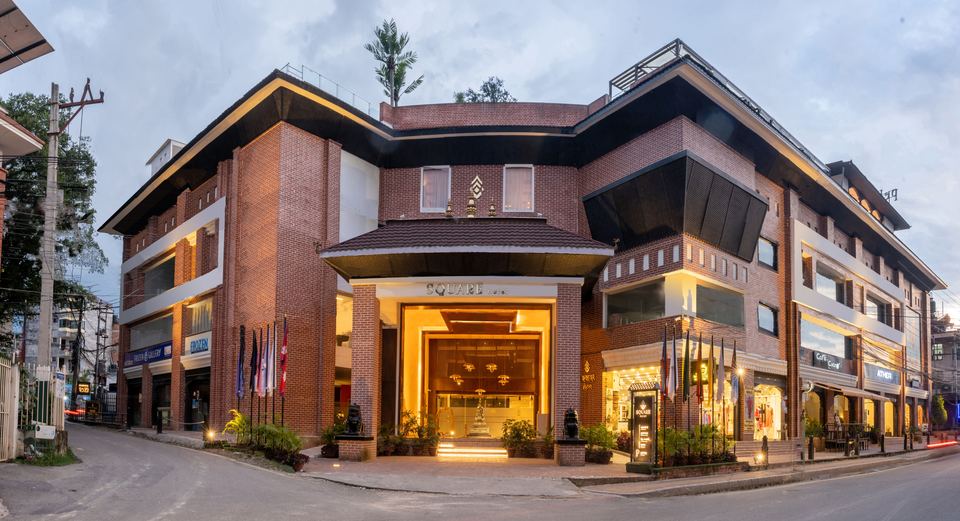
Every person on this project has been Nepali. The architects who drew it, the engineers who calculated it, the workers who built it. The slate wall at the entrance was carved by hand here in Patan. The fifteen prayer wheels in the lobby took three months to make and another month to align. The beds, headboards and furniture took a local manufacturer twelve months to build to our specifications.
None of this was the fast way. None of it was the cheap way. It was the way that put more rupees into more Nepali hands — and that was always the point.
The building has a few quieter ambitions. The walls are double-cavity construction. The windows are double-glazed. Together they hold heat in winter and out in summer, and they keep the city where it belongs — outside. Patan Durbar Square is a short walk away. In your room, you will not know it. A motorbike will still pass close enough, sometimes, to remind you that you are in Kathmandu — but that is the exception, and we think the exception is part of the texture.
When the pandemic arrived, two decisions changed the building. Every window would open — real air, not just conditioned air. Every surface a guest's hand might touch would be brass. The reception desk. The stair railings. The plates on the doors. Brass is naturally antimicrobial. It also ages into something more beautiful than it begins as, which we think is a useful thing for a hotel to be made of.
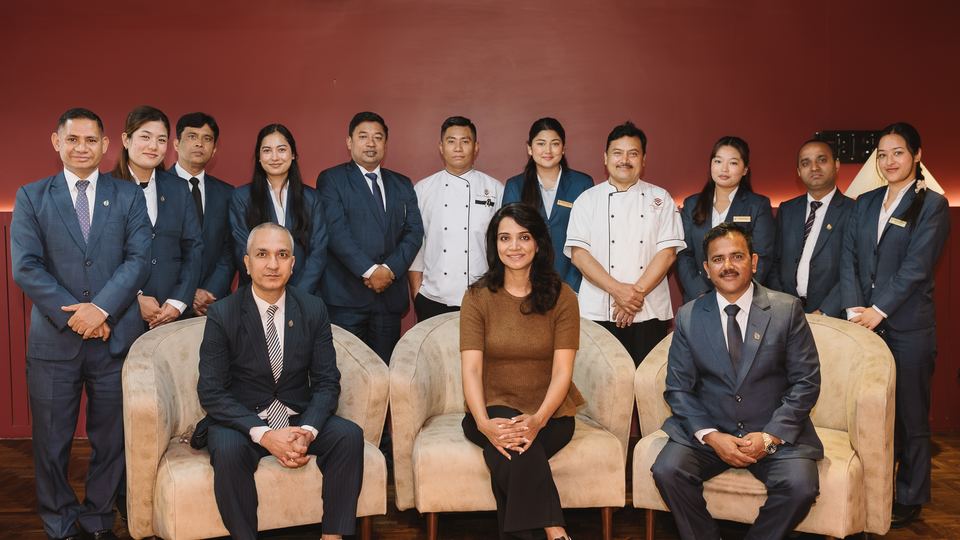
Square Hotel was created with a vision: to show the world what genuine Nepali hospitality looks like. Every day, a team of professional managers works to honour that vision. They are on the floor most hours of the day, trained not just in service, but in understanding what guests truly need. Whatever you need during your stay, ask any of them.
Proudly Nepali.
Permanent installation · Public halls
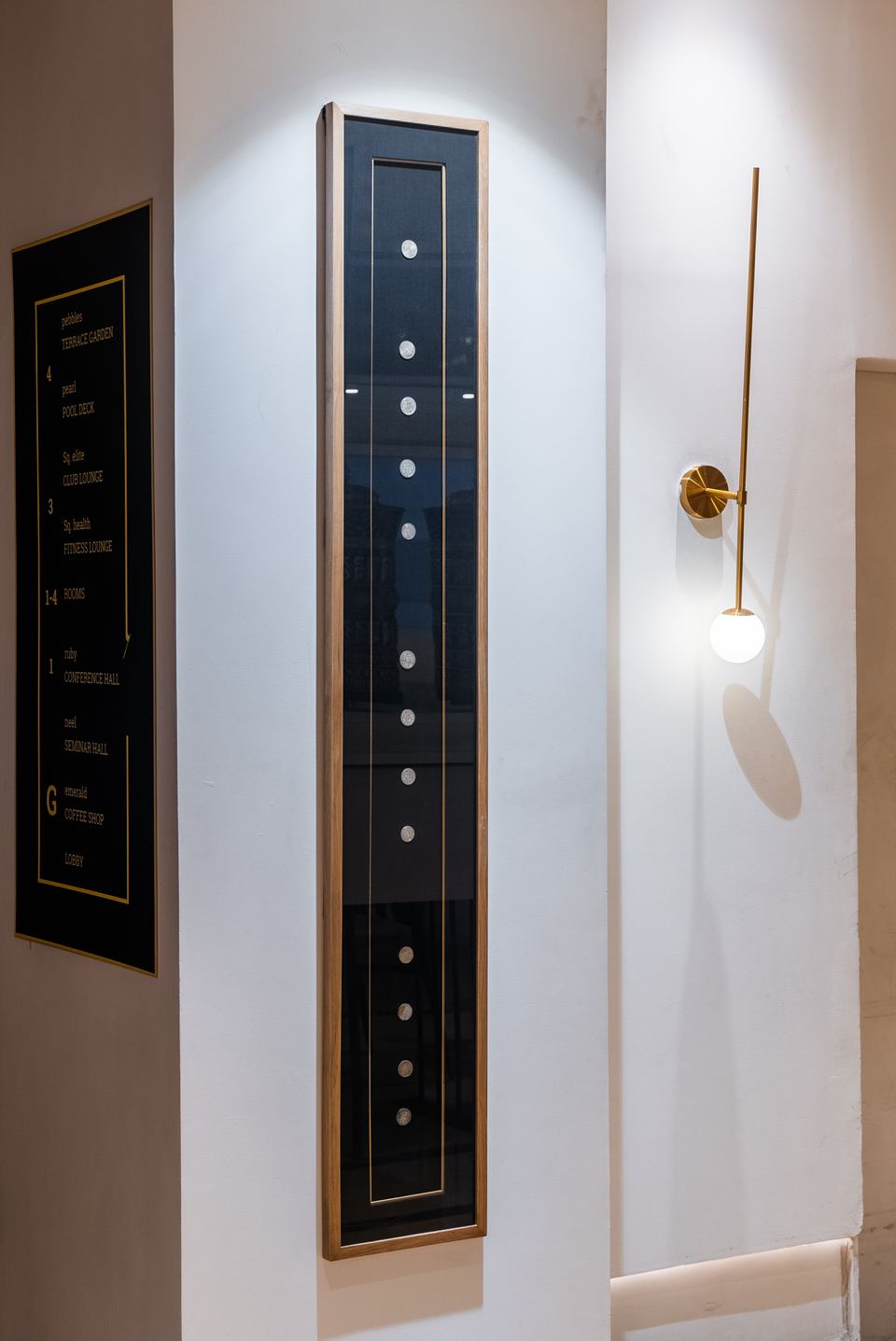
The halls are lined with Nepali coins gathered over three generations. The oldest is a Malla-era piece, struck around the early 1700s.
The collection was begun by a grandfather, continued by a father, and now belongs to the hotel. We did not build a museum; we built a hotel that happens to live alongside one. Ask at reception and we will walk you through the older pieces ourselves.
Of everything in this building, the coins are the only things we did not pay to make. They came to us. They will go to whoever comes after.
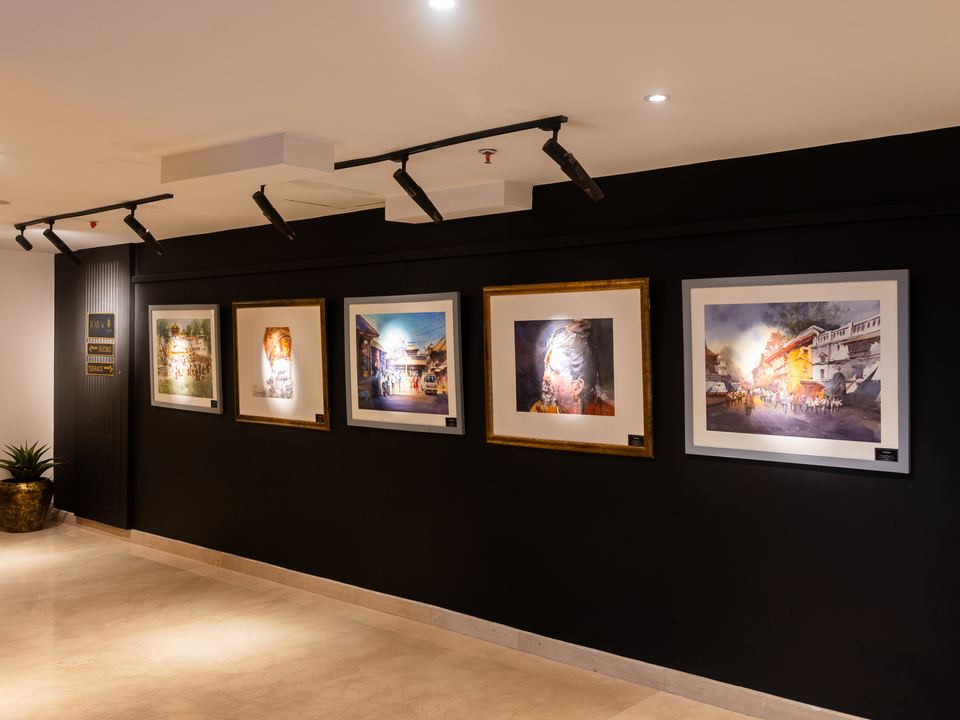
In partnership with Gallery 108, Patan
Just outside Pebbles Terrace Garden, a wall holds paintings by Nepali artists, on rotation, hung with Gallery 108 — a Patan gallery run by a friend of the family.
The rotation changes. The intent does not. If the coins downstairs are where Nepal has been, this floor is where Nepal is going.
A building is the sum of decisions. These are some of ours: real materials, real timelines, and the Nepali hands that took the time to do it properly.
The reception desk and the chandelier above it were made for Square. The brass was hammered by hand — every dimple its own. The chandelier alone took a month to install.
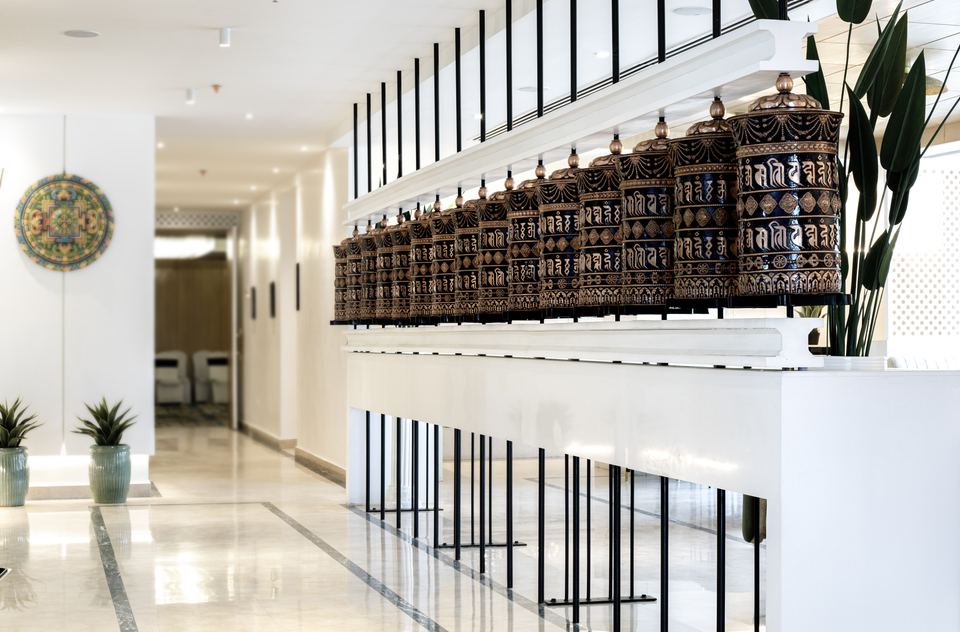
Three months to make. One month to install, properly aligned. Each wheel turns; spin one when you arrive.
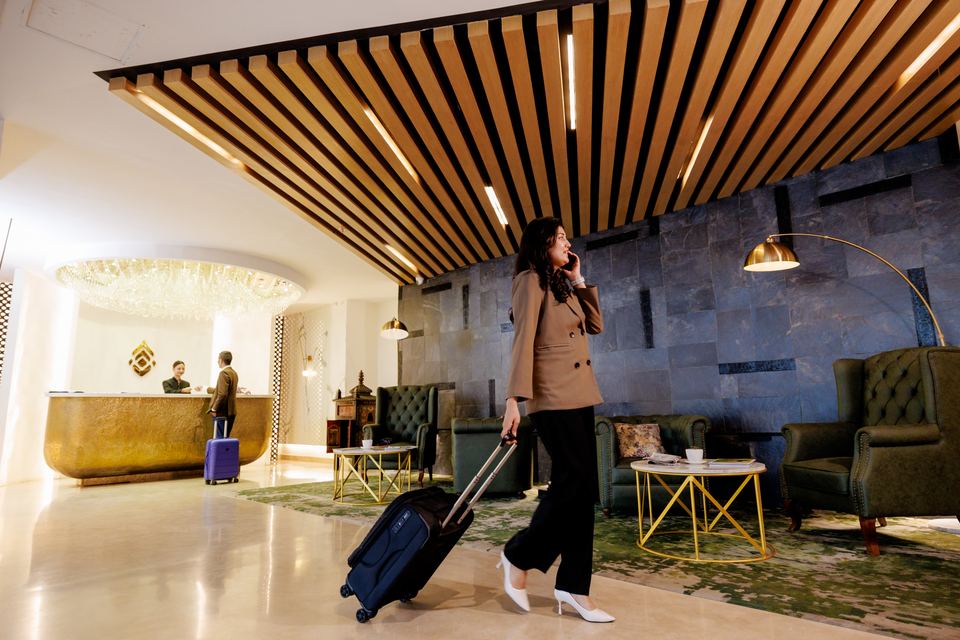
Carved by craftsmen here in Patan and installed by hand over a month. No two stones are alike.
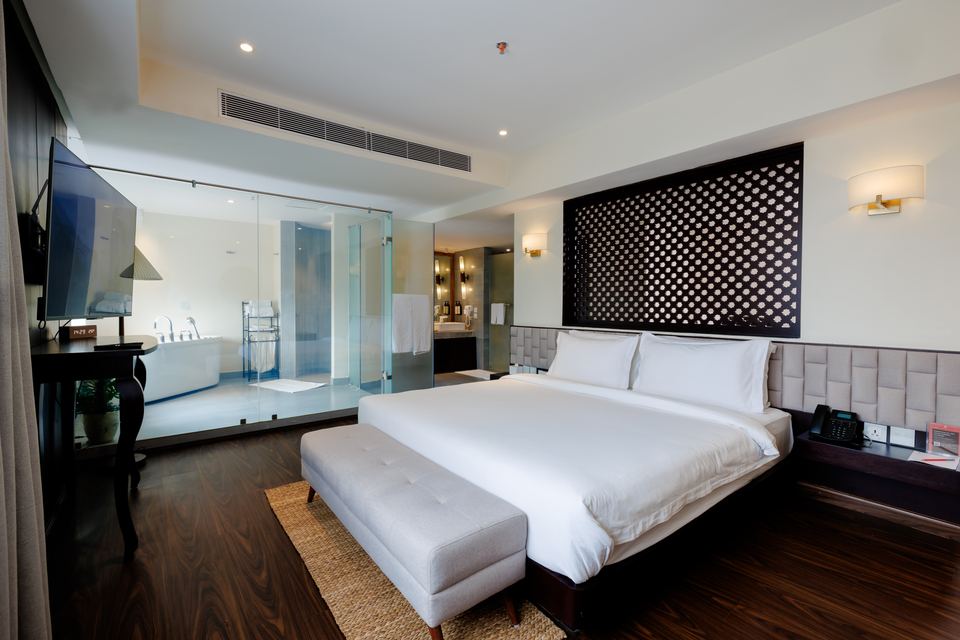
Beds, headboards and furniture, made by a local workshop that took more than a year to build them to our specifications. The lattice echoes a tikijhya window.
These decisions cost more, took longer and don't show up in any photo. We list them because we want you to know they were made.
Walls
Two layers, one cavity. Better insulation, less air-conditioning, quieter rooms.
Glass
Every window is double-paned. After the pandemic, every window also opens.
Water
Sewage and rainwater pass through soak pits first, returning some to the ground beneath us.
Energy
Nepal's grid runs on hydroelectric. Solar would have looked good in a brochure; we chose what was cleaner.
Surfaces
Reception desk, stair rails, door plates. Naturally antimicrobial. Kept for how it ages.
Hands
Architects, engineers, craftsmen — all Nepali, most from Patan.
Waste
Kitchen bio-waste is collected by local farmers. It doesn't end in a landfill.
Inheritance
Coins gathered across three generations. The oldest is from the early 1700s.
The booking takes a minute. We have spent eleven years on the rest.